What you'll learn
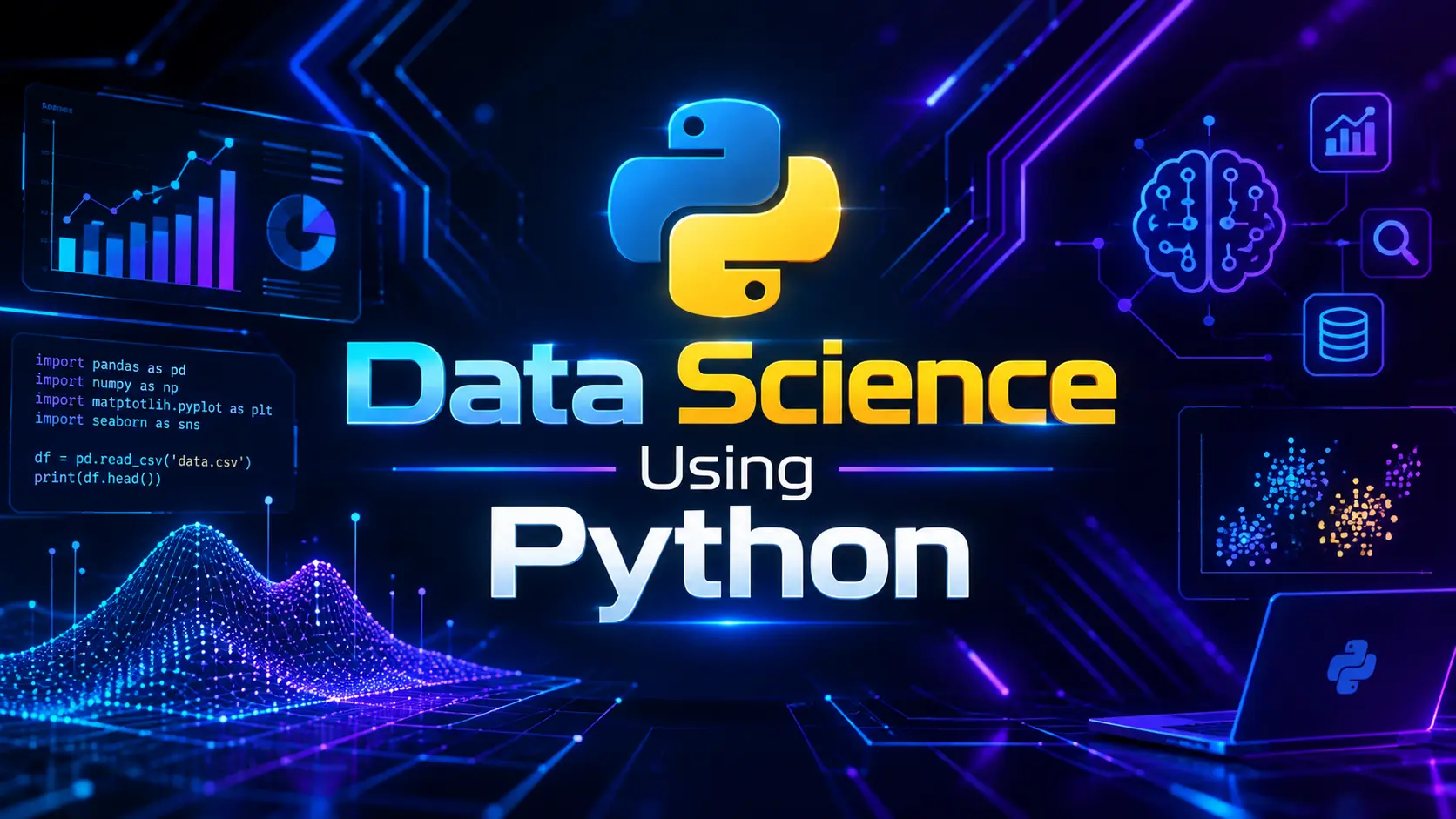
The Data Science Using Python course provides comprehensive practical training in Data Science using Python and its most widely used libraries. Students learn how to collect, clean, analyze and visualize data and use Machine Learning techniques to generate predictions and meaningful insights.
The course covers Python, NumPy, Pandas, Matplotlib, Seaborn and Scikit-learn, along with statistics, exploratory data analysis, regression, classification, clustering, feature engineering and model evaluation.
Through real-world datasets and practical projects, students learn how to transform raw data into useful information and develop complete Data Science workflows using Python.
What You Will Learn
- Data Science fundamentals
- Python programming for Data Science
- NumPy
- Pandas
- Data importing and exporting
- Data cleaning and preprocessing
- Exploratory Data Analysis
- Statistics for Data Science
- Data visualization using Matplotlib and Seaborn
- Machine Learning fundamentals
- Regression algorithms
- Classification algorithms
- Clustering
- Model evaluation
- Feature engineering
- Model optimization
- Working with APIs and databases
- Practical Data Science project development
Who Can Join?
- Students and graduates
- Computer and IT students
- Engineering students
- Python learners
- Data Analytics learners
- Aspiring Data Scientists
- Aspiring Data Analysts
- Machine Learning beginners
- Working professionals
- Anyone interested in Python and Data Science
Prerequisite
- Basic computer knowledge
- Basic mathematics is helpful
- Basic Python knowledge is beneficial but not mandatory
- No previous Data Science experience is required
Course Outcome
After completing this course, students will be able to:
- Understand the Data Science lifecycle
- Write Python programs for data analysis
- Work with NumPy and Pandas
- Import and process different datasets
- Clean and preprocess real-world data
- Perform Exploratory Data Analysis
- Create meaningful data visualizations
- Apply statistical concepts to datasets
- Build basic Machine Learning models
- Perform regression and classification
- Apply clustering techniques
- Evaluate Machine Learning models
- Perform feature engineering
- Develop complete practical Data Science projects
- Present and interpret data-driven insights
Practical Projects
Students can work on projects such as:
- Student Performance Analysis
- Sales Data Analysis
- House Price Prediction
- Customer Segmentation
- Employee Data Analysis
- Customer Churn Prediction
- Loan Approval Prediction
- Product Recommendation System
- Sales Forecasting
- Sentiment Analysis
- Business Performance Analysis
- Final Real-World Data Science Project
Career & Learning Opportunities
After completing the course, students can explore entry-level opportunities such as:
- Data Science Trainee
- Data Scientist Trainee
- Python Data Analyst
- Data Analyst Trainee
- Junior Data Analyst
- Machine Learning Trainee
- Python Developer Trainee
- Data Science Project Assistant
- Business Analytics Trainee
- Predictive Analytics Trainee
- Data Visualization Trainee
- Junior Machine Learning Developer
- Data Processing Executive
- Research/Data Analysis Assistant
This course also provides a strong foundation for advanced learning in Machine Learning, Artificial Intelligence, Deep Learning, Generative AI, Predictive Analytics and Advanced Data Science.
 Bestseller