Best Seller Icon Bestseller

Excellence In ADVANCE ODOMETER SYSTEM(S-EAOS-8554)

  • Last updated Oct, 2026
  • Certified Course

Course Includes

  • Duration2 Months
  • Enrolled0
  • Lectures50
  • Videos0
  • Notes0
  • CertificateYes

What you'll learn

The Advance Odometer System course is a practical electronics and embedded systems program designed to teach learners how to develop a digital system for measuring distance, wheel rotation, speed, and travel data. The course combines sensors, encoders, microcontrollers, programming, digital displays, data storage, and calibration techniques.

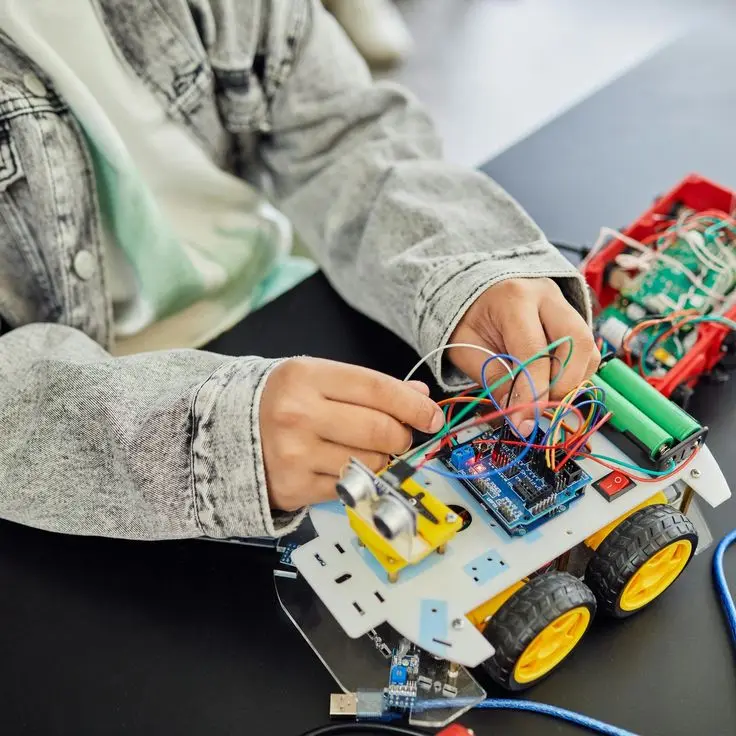
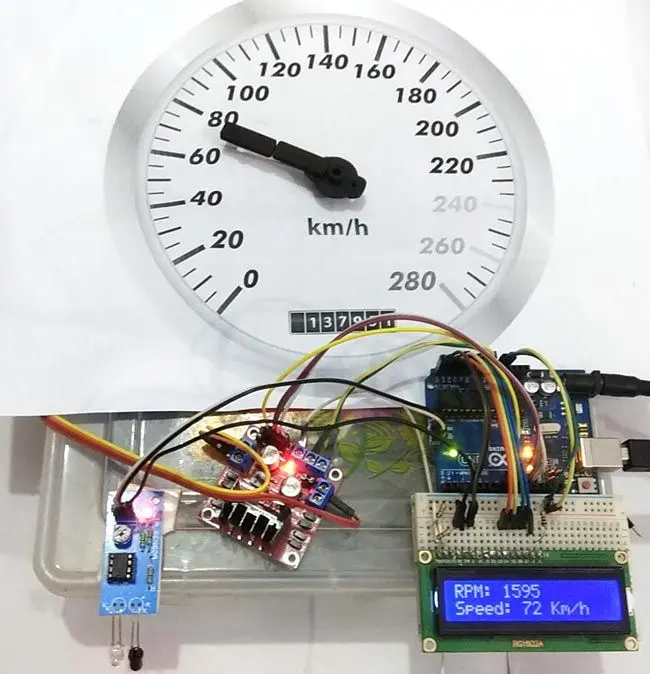
Students learn how wheel rotation can be detected using sensors such as Hall-effect sensors, IR sensors, or encoders and converted into useful distance and speed information. The course includes hands-on activities for building digital odometers, measuring RPM, displaying real-time data, storing readings, and improving measurement accuracy.

What You Will Learn

  • Fundamentals of odometer systems
  • Digital and electronic odometer concepts
  • Wheel rotation measurement
  • Hall-effect and IR sensor integration
  • Rotary encoder fundamentals
  • Pulse counting and interrupt programming
  • Wheel circumference and distance calculations
  • RPM and speed measurement
  • LCD/OLED display integration
  • Trip and total distance measurement
  • Data storage using microcontroller memory
  • Bluetooth and wireless monitoring concepts
  • Odometer calibration and accuracy improvement
  • Hardware and software troubleshooting
  • Development of a complete Advance Odometer System

Who Can Join?

  • School students
  • Electronics beginners
  • Robotics learners
  • STEM students
  • Engineering and diploma students
  • ITI and technical students
  • Arduino beginners
  • Embedded systems learners
  • Automotive technology enthusiasts
  • Students interested in sensors and automation

Prerequisite

Basic computer knowledge and logical thinking are helpful. Basic electronics or programming knowledge is an advantage but not mandatory. No previous experience in odometer development is required.

Course Outcome

After completing this course, learners will be able to:

  • Understand the working principle of digital odometer systems.
  • Interface wheel rotation sensors with a microcontroller.
  • Detect and count wheel rotation pulses.
  • Calculate wheel circumference and travelled distance.
  • Measure RPM and basic vehicle speed.
  • Display real-time distance and speed information.
  • Implement trip and total distance functions.
  • Store odometer readings in microcontroller memory.
  • Calibrate sensors for improved measurement accuracy.
  • Integrate basic wireless monitoring features.
  • Troubleshoot sensor, circuit and programming problems.
  • Build and demonstrate a functional Advance Odometer System.

Career & Learning Opportunities

  • Embedded Systems Trainee
  • Electronics Project Trainee
  • Robotics Project Assistant
  • Automotive Electronics Trainee
  • IoT Project Trainee
  • Sensor Technology Trainee
  • Automation Trainee
  • Embedded Systems Project Assistant
  • Electronics Technician – Entry Level
  • Robotics Lab Assistant
  • STEM/Robotics Trainer – Entry Level
  • Prototype Development Assistant


Show More

Course Syllabus

Module 1: Introduction to Odometer Systems

  • Introduction to odometers
  • What is an odometer system?
  • Working principle of an odometer
  • Types of odometer systems
  • Mechanical and digital odometers
  • Applications in vehicles and robotics
  • Introduction to advanced digital odometers

Module 2: Electronics Fundamentals

  • Basic electronic components
  • Voltage, current and resistance
  • Resistors and capacitors
  • LEDs and switches
  • Breadboard fundamentals
  • Basic circuit connections
  • Power supply concepts

Module 3: Odometer System Components

  • Microcontroller
  • Wheel and shaft mechanism
  • Rotation sensors
  • Hall-effect sensors
  • IR sensors
  • Display module
  • Battery and power supply
  • Connecting wires and electronic modules

Module 4: Microcontroller Fundamentals

  • Introduction to microcontrollers
  • Arduino overview
  • Arduino board components
  • Digital and analog pins
  • Input and output devices
  • Interrupt concepts
  • Connecting sensors to a microcontroller

Module 5: Arduino Programming Basics

  • Introduction to Arduino IDE
  • Program structure
  • Variables and data types
  • Operators
  • Conditional statements
  • Loops and functions
  • Serial communication
  • Uploading and testing programs

Module 6: Wheel Rotation & Distance Measurement

  • Understanding wheel rotation
  • Wheel circumference
  • Revolutions per minute
  • Distance calculation
  • Pulses per revolution
  • Sensor-based rotation counting
  • Converting rotations into distance

Module 7: Sensors for Odometer Systems

  • Introduction to motion sensors
  • Hall-effect sensor
  • Magnetic encoder concepts
  • IR sensor-based rotation detection
  • Encoder fundamentals
  • Sensor positioning
  • Reading sensor pulses

Module 8: Encoder & Pulse Counting

  • Introduction to rotary encoders
  • Encoder types
  • Pulse generation
  • Pulse counting
  • Digital signal processing
  • Interrupt-based counting
  • Accuracy improvement techniques

Module 9: Digital Display System

  • Introduction to display modules
  • 16x2 LCD
  • OLED display concepts
  • Display connections
  • Showing distance values
  • Showing speed and rotation data
  • Creating a user-friendly display interface

Module 10: Speed Measurement

  • Introduction to speed measurement
  • RPM calculation
  • Wheel speed calculation
  • Distance per unit time
  • Real-time speed display
  • Speed measurement programming
  • Testing and calibration

Module 11: Distance Calculation & Calibration

  • Distance calculation formulas
  • Wheel diameter measurement
  • Wheel circumference calculation
  • Sensor pulse calibration
  • Error calculation
  • Calibration techniques
  • Improving measurement accuracy

Module 12: Advanced Odometer Features

  • Trip distance measurement
  • Total distance measurement
  • Speed monitoring
  • Reset function
  • Data storage concepts
  • Multiple measurement modes
  • Real-time monitoring

Module 13: Data Storage & Memory

  • Microcontroller memory
  • EEPROM concepts
  • Saving odometer values
  • Storing trip information
  • Data retrieval
  • Reset and data protection
  • Memory management

Module 14: Advanced Monitoring & Communication

  • Serial monitoring
  • USB communication
  • Bluetooth communication concepts
  • Wireless distance monitoring
  • Mobile data display concepts
  • Real-time data transmission
  • Basic IoT integration concepts

Module 15: Power Supply & Battery Management

  • Battery types
  • Selecting suitable batteries
  • Voltage requirements
  • Power distribution
  • Sensor power requirements
  • Battery monitoring concepts
  • Safe power management

Module 16: Troubleshooting & Accuracy Improvement

  • Sensor detection problems
  • Incorrect pulse counting
  • Display problems
  • Wiring errors
  • Power supply issues
  • Calibration errors
  • Software debugging
  • Improving measurement accuracy

Module 17: Odometer Applications

  • Automotive odometer concepts
  • Bicycle distance measurement
  • Robotics applications
  • Mobile robot navigation
  • Industrial wheel monitoring
  • Vehicle tracking concepts
  • Smart transportation applications

Module 18: Advance Odometer Project Design

  • Project planning
  • Component selection
  • Sensor selection
  • Circuit design
  • Wheel and sensor installation
  • Programming workflow
  • Calibration procedure
  • Project documentation

Module 19: Practical Odometer Projects

  • Basic digital odometer
  • Wheel rotation counter
  • Bicycle odometer
  • Speed and distance meter
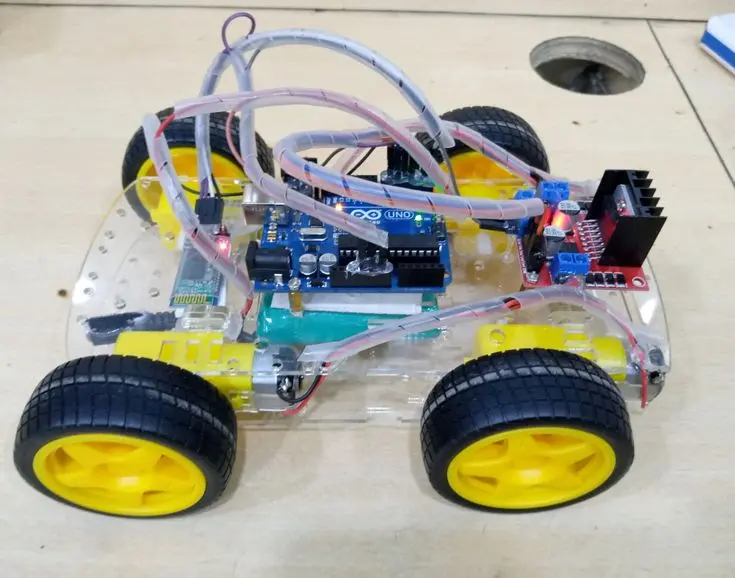
  • Robot wheel odometer
  • Bluetooth-enabled odometer
  • Real-time distance monitoring system

Module 20: Final Advance Odometer System Project

  • Complete circuit assembly
  • Sensor and encoder integration
  • Microcontroller programming
  • Distance calculation
  • Speed measurement
  • Digital display integration
  • Calibration and testing
  • Troubleshooting
  • Final project demonstration
  • Practical assessment


Review

0.0
Course Rating (0 reviews)
0%
0%
0%
0%
0%


Call
Text Message
Review
Email
CHAT