What you'll learn
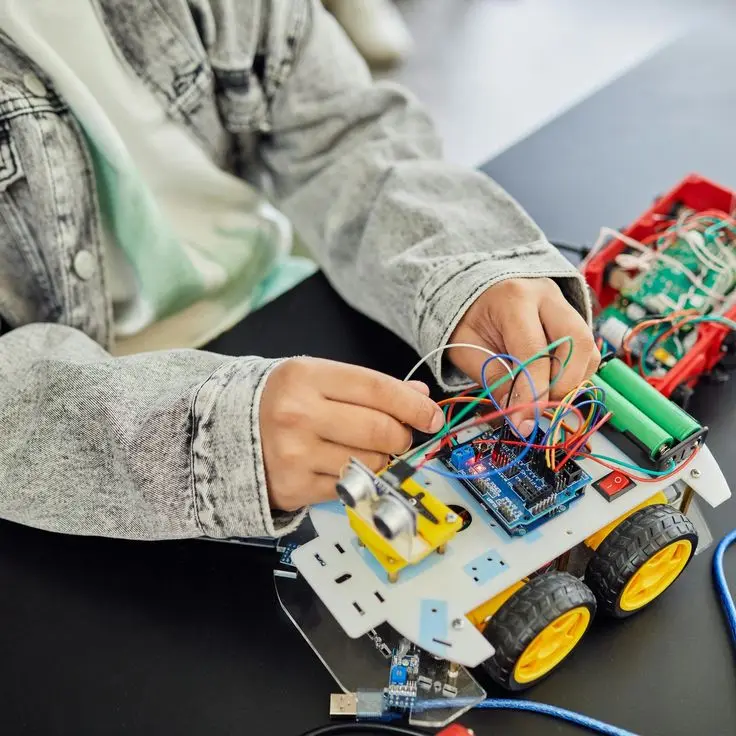
Humanoid is a practical robotics course designed to introduce learners to the design, assembly, programming and control of human-like robots.
The course covers the fundamental concepts required to develop a basic humanoid robot, including robotic structures, servo motors, microcontrollers, sensors, joint control, walking mechanisms, balance, robotic arms, wireless communication and human-robot interaction.
Learners gradually progress from basic electronics and programming to coordinating multiple servo motors and creating humanoid movements such as walking, turning, hand gestures and interactive responses. The course also introduces the role of AI, computer vision and speech technologies in modern humanoid robotics.
What You Will Learn
- Fundamentals of humanoid robotics
- Humanoid robot structure and components
- Robotic joints and Degrees of Freedom
- Microcontroller programming
- Servo motor control
- Multiple servo synchronization
- Humanoid arm and leg movement
- Walking and turning mechanisms
- Balance and stability
- Ultrasonic and other robotic sensors
- Robotic head and gesture control
- Robotic arm movements
- Voice and sound interaction concepts
- Bluetooth and wireless robot control
- Human-robot interaction
- AI and computer vision concepts
- Humanoid robot assembly and troubleshooting
- Practical humanoid robotics projects
Who Can Join?
- School students
- Robotics beginners
- STEM learners
- Engineering and diploma students
- Electronics students
- Mechanical students
- Mechatronics students
- Arduino and embedded systems learners
- Robotics enthusiasts
- Students interested in AI and advanced robotics
Prerequisites
- Basic computer knowledge
- Basic mathematical and logical reasoning
- Basic electronics knowledge is helpful but not mandatory
- No previous humanoid robotics experience is required
Course Outcomes
After completing the course, learners will be able to:
- Understand the basic architecture of humanoid robots
- Identify major mechanical and electronic components
- Control servo motors using a microcontroller
- Program basic humanoid joint movements
- Coordinate multiple servo motors
- Develop basic walking and turning sequences
- Implement sensors in humanoid robots
- Understand balance and stability concepts
- Create basic robotic gestures and interactions
- Use wireless communication for robot control
- Understand AI and computer vision applications in humanoid robotics
- Assemble and troubleshoot a basic humanoid robot
- Develop and demonstrate a practical humanoid robotics project
Career & Learning Opportunities
- Humanoid Robotics Trainee
- Robotics Project Assistant
- Robotics Technician – Entry Level
- Embedded Systems Trainee
- Robotics Programming Assistant
- Mechatronics Project Trainee
- Electronics Project Trainee
- AI & Robotics Project Assistant
- Robotics Lab Assistant
- STEM/Robotics Trainer – Entry Level

 Bestseller